Crawl Space Water Damage in Heritage Lake: Removal & Drying
A wet crawl space is one of those problems you cannot see until the damage is already done. You smell it first, a musty edge in the hallway, or you notice your hardwood cupping near the kitchen. By the time most Heritage Lake homeowners pull back the access panel, there is standing water, soaked insulation hanging from the joists, and the early stages of mold setting in on the subfloor.
This guide is built for fast scanning. If you are reading this at midnight with a flashlight in one hand and your phone in the other, skip to the table and the action list. Heritage Lake Water Restoration has handled crawl space water removal across Central Indiana since 2018, and we want you to understand exactly what needs to happen, in what order, and what it should cost. We are IICRC certified, BBB A+ rated, and if your situation does not actually need a restoration crew, we will tell you directly.
Below you will find the IICRC water categories, drying timelines, equipment counts, and pricing ranges that apply to most Heritage Lake homes built on crawl space foundations.
Quick Answer: What To Do Right Now
If your crawl space has standing water in Heritage Lake, the priority order is shut off the source, kill power to the area, document everything with photos, and call a certified water restoration crew within 24 to 48 hours. After 48 hours, Category 1 clean water shifts to Category 2, and microbial growth begins on wood framing.
- Shut off the water main or the failing fixture
- Cut power to crawl space circuits at the breaker
- Photograph water depth, insulation, and any visible mold
- Do not enter if water is near electrical or if you suspect sewage
- Call a certified pro for extraction and drying
DIY vs Professional: An Honest Take
A shop vac and a box fan will not dry a crawl space. The cubic footage, the trapped humidity, and the porous wood framing require commercial equipment and daily monitoring. If your situation is a few gallons from a single overflow and you can verify dryness in 48 hours with a meter, you may be fine handling it yourself. Anything beyond that, get a professional moisture map from Heritage Lake Water Restoration before the damage compounds.
Get Eyes Under Your Home Before It Gets Worse
Crawl space water damage rewards fast action and punishes delay. If you have noticed cupping floors, musty odors, higher humidity upstairs, or visible moisture near your foundation, Heritage Lake Water Restoration can have a technician at your Heritage Lake property the same day to assess the situation, document findings, and give you a straight answer on whether you need full extraction or just monitoring. No pressure, no scare tactics, just the truth about what is under your house.
Insurance Claim Language That Helps
When you call your carrier, use these phrases. They map cleanly to standard homeowner policy language and speed up your claim.
- "Sudden and accidental discharge of water" (covered under most HO-3 policies)
- "Resulting damage from a covered peril"
- "Mitigation services to prevent further loss" (your policy requires you to act quickly)
Groundwater intrusion and long term seepage are usually excluded. If your loss originated from a burst supply line, see our breakdown of burst pipe water damage costs and steps for documentation tips. For broader scope and pricing detail, our water damage restoration overview covers the full process from call to certificate of completion.
What Drives the Cost in Heritage Lake
- Square footage and water depth. A 600 sq ft crawl with one inch of water is a different job than 2,000 sq ft with six inches.
- Access. An 18-inch belly crawl with a single hatch takes longer than a stand up basement style crawl.
- Insulation type. Batt insulation almost always gets removed. Closed cell spray foam often survives.
- Mold presence. If mold has already established, remediation adds $1,500 to $6,000.
- Category of water. Category 3 doubles or triples the cost due to PPE, disposal, and decontamination.
- Drying time. Each extra day of equipment rental adds $200 to $500 to the total.
The Removal and Drying Process Step by Step
Step 1: Assessment and Moisture Mapping
Your technician uses a thermal camera and pin style moisture meter to map the affected area. We log readings on framing, subfloor, and any insulation. Acceptable dry standard for wood is under 16 percent moisture content. Heritage Lake Water Restoration also checks the underside of the subfloor with a non penetrating meter, since wicking can travel 12 to 24 inches up a joist before any visual sign appears. These baseline readings become the reference points for every daily check that follows.
Step 2: Water Extraction
truck mounted or portable extractors pull standing water through long hoses fed into the crawl space. A typical 1,200 square foot crawl space with two inches of standing water takes between 2 and 5 hours to extract fully. If the crawl has a vapor barrier trapping water underneath, the barrier is cut in sections, drained, and either decontaminated or discarded based on water category.
Step 3: Removal of Unsalvageable Materials
- Wet fiberglass batt insulation (loses R-value once saturated)
- Wet vapor barriers and plastic sheeting
- Cardboard, stored boxes, organic debris
- Category 2 or 3 contaminated wood, if structurally compromised
- Soaked support beam shims and wood blocking
Step 4: Structural Drying
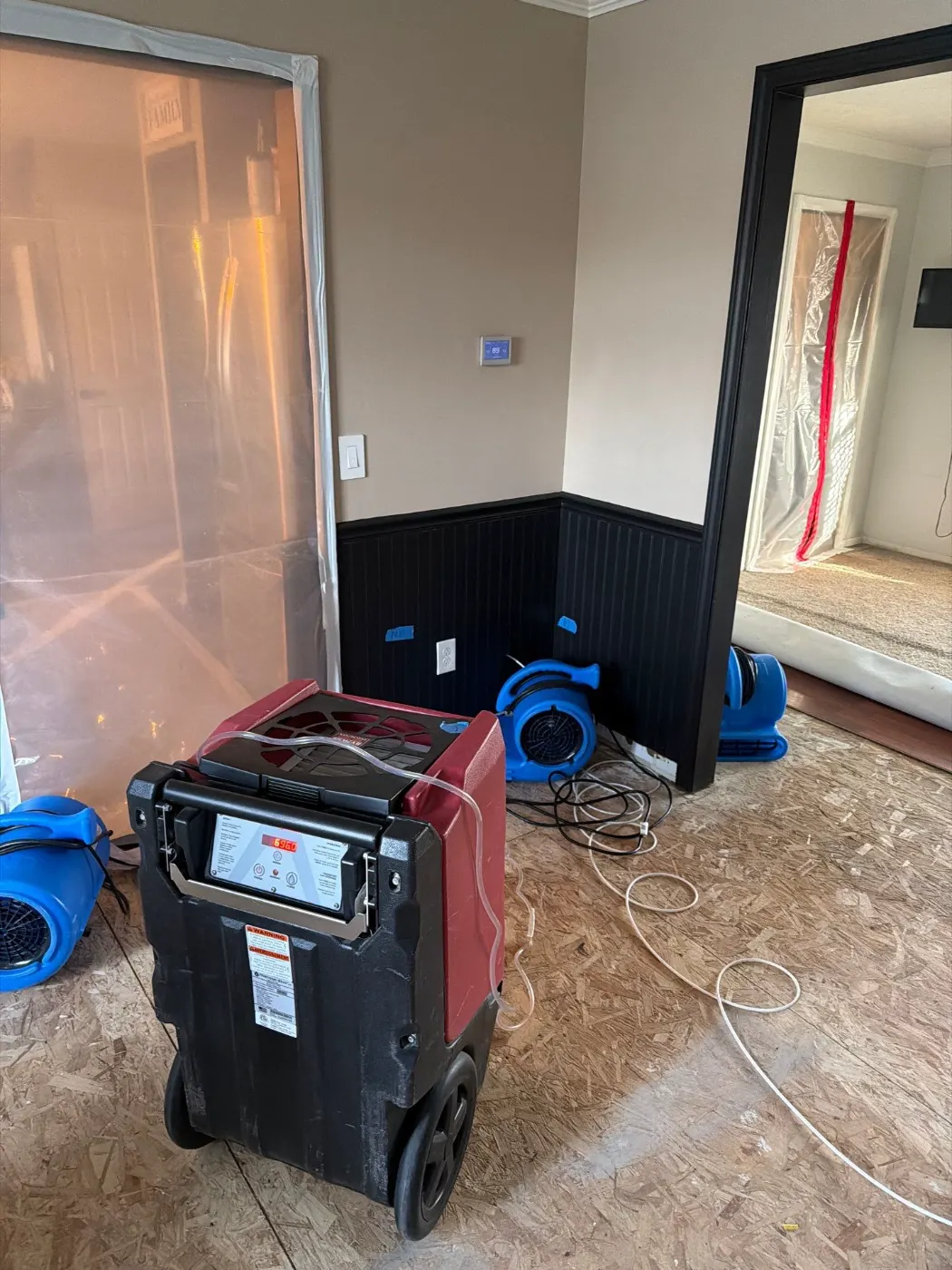
This is where most homeowners underestimate the work. Drying a crawl space requires sealed containment, commercial dehumidifiers, and air movers placed on a calculated grid. For a typical Heritage Lake home, expect 3 to 6 dehumidifiers and 6 to 12 air movers running for 4 to 7 days. Daily moisture logs document progress, and equipment is repositioned as wet zones shrink. Skipping the containment step lets humid air migrate back in from vents and recontaminates dried framing.
Step 5: Antimicrobial Treatment and Verification
After framing reaches dry standard, an EPA-registered antimicrobial is applied to wood surfaces. A final moisture map is documented for your insurance file. Heritage Lake Water Restoration provides a closeout report with before and after readings, photos, equipment logs, and the antimicrobial product data sheet.
Warning Signs You Should Not Ignore
- Musty odor that intensifies when the HVAC runs
- Cupped, buckled, or stained hardwood floors above the crawl
- Higher than usual humidity readings on the main floor (above 55 percent)
- Visible condensation on ductwork or pipes
- Unexplained allergy or respiratory symptoms in the household
- Rust on metal supports, hangers, or HVAC components
- Sagging or springy spots in the floor above the crawl
- Efflorescence (white mineral staining) on foundation walls
Preventing the Next Crawl Space Flood
Once your crawl is dry and certified, a few targeted upgrades reduce the odds of a repeat call. Most Heritage Lake homeowners see the biggest return from grading and drainage work outside the home before investing inside.
- Extend downspouts 6 to 10 feet away from the foundation
- Regrade soil so it slopes away from the house at least 6 inches over 10 feet
- Install a sump pump with a battery backup if your water table is high
- Encapsulate the crawl with a sealed 12 to 20 mil vapor barrier
- Add a dedicated crawl space dehumidifier set to 50 to 55 percent
- Inspect supply lines, washing machine hoses, and water heater connections annually
Crawl Space Water Damage by IICRC Category
The category of water dictates the cleanup protocol, the personal protective equipment, and whether materials can be dried in place or must be removed. This is the same framework your insurance adjuster will reference.
| Category | Source | Crawl Space Action | Typical Cost Range |
|---|---|---|---|
| Category 1 | Supply line, rain seepage | Extract, dry, sanitize | $1,500 to $4,000 |
| Category 2 | Washing machine, dishwasher overflow | Extract, remove wet insulation, antimicrobial treatment | $3,000 to $7,500 |
| Category 3 | Sewage backup, groundwater flooding | Full removal of porous materials, biohazard protocols | $6,000 to $15,000+ |
For sewage related crawl space contamination, review our sewage cleanup service page before any DIY contact. Category 3 water carries bacteria, viruses, and chemical contamination that household cleaners cannot neutralize.
Frequently Asked Questions
How quickly should crawl space water be removed?
Within 24 to 48 hours. Mold begins colonizing wet wood in that window, so Heritage Lake Water Restoration dispatches extraction crews same-day across Heritage Lake.
Does homeowners insurance cover crawl space water damage?
Usually yes for sudden events like burst pipes, and usually no for groundwater seepage or long-term leaks. Heritage Lake Water Restoration documents the cause to support your Heritage Lake claim.
Can I dry the crawl space myself with fans?
Household fans move air but do not remove moisture. Professional LGR dehumidifiers and moisture mapping are what actually dry framing to safe levels.
How long does crawl space drying take?
Three to five days for clean water and five to seven days for contaminated water. Heritage Lake Water Restoration runs daily moisture readings until the structure hits target dryness.
Should I encapsulate the crawl space after water damage?
Encapsulation is a good long-term upgrade once the space is fully dry and treated. Sealing a wet crawl space traps moisture and accelerates rot, so timing matters.
Have a restoration question?
Our IICRC certified Heritage Lake crew is ready to help. Free assessments, estimate based on what we can sees, no pressure.